2nd Swing Golf
Master fitters, Trackman-heavy testing
“I could play this club. That's about as good as it gets.”
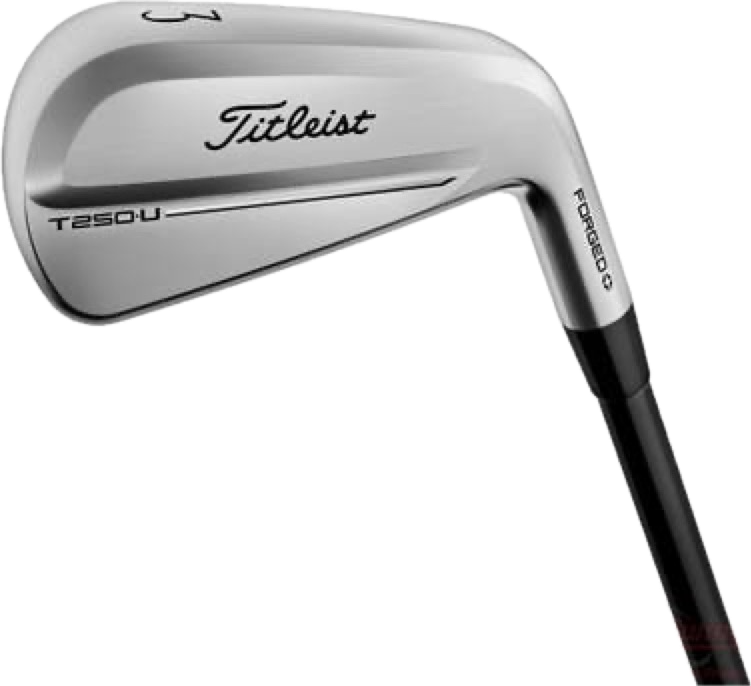
A compact, forgiving driving iron that delivered ridiculously consistent flight in testing, with peak height in a two-foot window and a 41-degree landing angle nearly every swing.
+ the facts · 5 pros · 1 cons− the facts
- +Extremely consistent peak height and landing angle, 41 degrees on four straight shots
- +Smaller than expected at address but still forgiving, with clean brushed steel Titleist looks
- +Mishits held total distance and kept spin over 3,000 rpm
- −Needs high ball speed to perform; lower launching than the U505 by design
For: High-speed players for whom anything besides a driving iron flies too high; it flights the ball down, reduces spin, and gives shotmaking control

Mark Crossfield
Coach, famously hard to impress
The better-player utility iron of the two, flying lower and more forward off the tee, and blending naturally with T250 down to T100 sets.
+ the facts · 3 pros · 1 cons− the facts
- +Lower, forward penetrating flight for tight tee shots
- +Looks like a regular iron with a bit of help
- +Blends with T250, T150 and T100 sets
- −Lower flight needs enough speed to work, good and bad depending on the player
For: Better players wanting a driving iron that matches a T100-T250 set

MyGolfSpy
Data-driven independent testing
The T250 reimagined in a driving iron chassis, now with a hybrid sized hosel bore. Progressive shaping hides the cavity structure that used to be visible at address in the higher lofts.
+ the facts · 3 pros · 1 cons− the facts
- +Hybrid sized hosel bore opens up shaft options
- +Progressive shaping cleans up the address look, especially in higher lofts
- +$278 with stock Project X shafts
- −Evolutionary rather than a new offering
For: Players who want a driving iron in the more compact chassis